
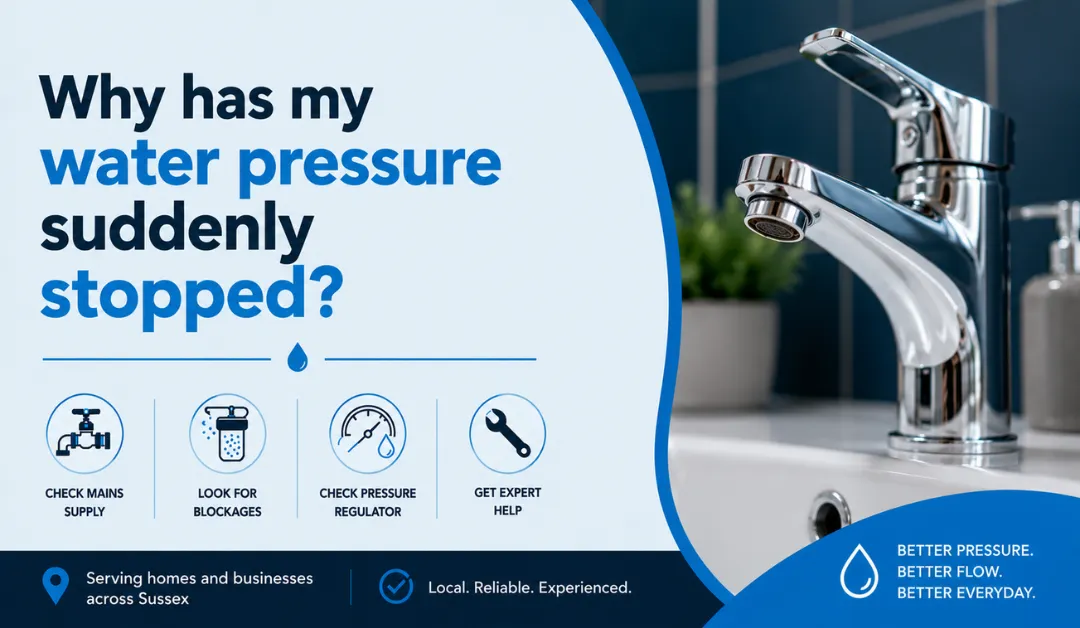
Turning on a tap and finding nothing coming out can be alarming. Whether it happens in the kitchen, bathroom, or throughout the entire property, losing your water supply is something that demands immediate attention.
If you’re experiencing no water pressure in house situations, the cause could be anything from a simple shut-off valve issue to a burst underground water main. The key is identifying the problem quickly before it leads to property damage, costly repairs, or prolonged disruption.
This guide explains exactly what to do when there is no water pressure, why it happens, how to diagnose the issue, and when it’s time to call a specialist.
What Does “No Water Pressure” Actually Mean?
Many homeowners use the terms interchangeably, but there is a difference between low pressure and no pressure.
Low pressure means water still flows from taps, but the flow is weak.
No pressure means little to no water reaches your taps at all.
In most cases, if there is absolutely no water flow anywhere in the property, the issue is usually related to:
- A shut-off valve problem
- A supply interruption
- A burst pipe
- A failed pressure system
- A blockage in the water supply
The faster you identify the cause, the easier it is to restore normal service.
Start With the Most Important Question
Is the Problem Affecting the Whole House?
Before doing anything else, check multiple taps around the property.
Turn on:
- Kitchen cold tap
- Bathroom cold tap
- Upstairs tap
- Outside tap (if available)
If every tap has stopped working, the problem is likely affecting your main water supply.
If only one tap is affected, the issue is usually localised to that fixture rather than the property’s water system.
This simple check can save a significant amount of time during diagnosis.
First Check: Has Your Water Been Turned Off?
One of the most common reasons for no water in house situations is an accidentally closed stopcock.
The internal stop valve controls water entering your home. If it has been turned off during maintenance work, decorating, plumbing repairs, or by accident, water flow will stop completely.
Locate your stopcock and ensure it is fully open.
Common locations include:
- Under the kitchen sink
- Utility rooms
- Under-stairs cupboards
- Near the front entrance
- Garage areas
If you are unsure where it is located, our guide on how to find main water line into house uk can help identify the route of your property’s water supply.
Could Your Water Company Have Shut Off Supply?
Sometimes the problem has nothing to do with your property.
Planned maintenance works, emergency repairs, or local infrastructure failures can temporarily interrupt supply.
Before assuming there is a major issue inside your home:
- Ask neighbours if they have water.
- Check your water supplier’s service updates.
- Look for local repair notices.
If neighbouring properties also have no water, the issue is likely outside your boundary.
This is one of the most common answers to the question:
Why Is My Water Off?
Water companies occasionally isolate sections of the network to carry out repairs or upgrades.
In most cases, service is restored within a few hours.
Is There a Hidden Leak?
A significant underground leak can drastically reduce or completely stop water reaching your property.
Signs include:
- Wet patches in the garden
- Damp driveways
- Sinkholes
- Sudden increases in water bills
- Hissing sounds underground
- Water pooling during dry weather
A severe leak between the street main and your property can create enough water loss to leave you with almost no usable pressure indoors.
If you suspect this, professional mains water leak repair may be required immediately to prevent further damage.
Check the External Stop Tap
Many homeowners don’t realise there are usually two shut-off points.
Internal Stopcock
Located inside the property.
External Stop Tap
Usually located:
- Near the property boundary
- In a pavement chamber
- Under a small access cover
If the external valve has been accidentally closed during utility works, your home may lose water entirely.
Only inspect this if it is safe and accessible.
Never force a stuck valve.
Has a Pipe Burst Underground?
A burst supply pipe is one of the most serious causes of no water pressure in house problems.
When a pipe fails underground:
- Water escapes before reaching your property
- Pressure drops dramatically
- Supply may stop completely
Common signs include:
- Waterlogged lawns
- Sudden pressure loss
- Unexplained water usage
- Cracks appearing in driveways
- Damp patches near foundations
If you suspect a burst pipe, arranging burst pipe repair quickly can minimise both water loss and repair costs.
Problems With Older Water Supply Pipes
Many older Sussex properties still rely on ageing infrastructure.
Common issues include:
Lead Pipes
Lead pipes can:
- Corrode internally
- Restrict water flow
- Develop leaks
- Cause pressure problems
Understanding your potential lead pipe replacement cost can help determine whether replacement is a more economical long-term solution.
Galvanised Steel Pipes
Older galvanised pipes gradually accumulate internal corrosion.
Over time:
- Internal diameter reduces
- Water flow decreases
- Pressure drops
- Complete blockages become possible
Properties built several decades ago are particularly vulnerable.
Has Your Water Pressure System Failed?
Not every property relies solely on mains pressure.
Some homes use:
- Booster pumps
- Pressure vessels
- Stored water tanks
- Pumped systems
If one of these components fails, water may stop flowing even though the mains supply remains available.
Common symptoms include:
- Sudden complete loss of flow
- Pump noise stopping
- Intermittent water supply
- Pressure fluctuating before failure
A specialist inspection may be required to diagnose mechanical faults.
Could Frozen Pipes Be the Problem?
Although less common outside winter, frozen pipes remain a frequent cause of supply interruptions across the UK.
When water freezes:
- Flow stops
- Pressure disappears
- Pipes may burst
Signs include:
- Very cold weather
- Frost-covered pipework
- No flow from certain taps
- Strange noises within pipes
If you suspect frozen pipework:
- Keep heating on
- Open affected taps
- Warm pipes gradually
Never use naked flames.
Understanding Normal Water Pressure
Many homeowners are unsure whether they have low pressure or no pressure.
Understanding typical mains water pressure uk standards helps provide context.
Most UK properties receive between 1 and 3 bars of pressure.
Anything significantly below this can affect:
- Showers
- Washing machines
- Dishwashers
- Outdoor taps
If your property has historically struggled with weak flow, a professional assessment may reveal whether a water main upgrade could improve performance.
Is Your Water Main Too Small?
Some older properties were connected using supply pipes designed decades ago when water demand was much lower.
Today’s homes use:
- Power showers
- Multiple bathrooms
- Dishwashers
- Garden irrigation
- Modern appliances
Older pipe sizes sometimes cannot keep up.
In these situations, upgrading water mains pipe systems can dramatically improve both pressure and flow.
How Underground Water Mains Affect Pressure
Many pressure issues originate beneath the ground rather than inside the property.
Common underground causes include:
| Issue | Effect |
| Pipe leaks | Pressure loss |
| Crushed pipes | Restricted flow |
| Tree root intrusion | Partial blockage |
| Corrosion | Reduced capacity |
| Ground movement | Pipe damage |
If you suspect buried infrastructure problems, understanding how to find water pipes underground becomes important during investigations.
Professional detection equipment is often required to locate hidden defects accurately.
Can Water Main Replacement Solve the Problem?
In some properties, repeated pressure problems indicate the supply pipe itself has reached the end of its useful life.
Signs include:
- Frequent leaks
- Ongoing pressure fluctuations
- Discoloured water
- Corroded pipework
- Multiple repair histories
In these cases, Water Main Replacement Sussex services often provide the most cost-effective long-term solution.
Rather than repeatedly repairing ageing infrastructure, replacement eliminates the underlying problem.
Modern Trenchless Solutions
Many homeowners worry that replacing a water main means extensive excavation.
Fortunately, modern methods are much less disruptive.
Using Moling Services Sussex, contractors can often install new pipes beneath:
- Gardens
- Driveways
- Paths
- Patios
without extensive trench digging.
This approach significantly reduces disruption and reinstatement costs.
If you’re curious about installation methods, understanding the Moling Process helps explain why trenchless technology has become increasingly popular across Sussex.
Who Is Responsible for the Problem?
Responsibility depends entirely on where the fault occurs.
Water Company Responsibility
Generally includes:
- Water mains in public roads
- Communication pipes up to property boundaries
Homeowner Responsibility
Typically includes:
- Supply pipes inside property boundaries
- Internal plumbing
- Stopcocks
- Private water infrastructure
If you’re unsure, understanding who is responsible for mains water pipes on my property can help clarify where responsibility begins and ends.
Emergency Situations Requiring Immediate Action
Some situations should never be ignored.
Seek urgent assistance if you experience:
- Complete water loss combined with flooding
- Visible ground collapse
- Major underground leaks
- Burst pipes
- Water entering the property structure
In these situations, knowing your emergency water shut off procedure can significantly reduce damage before professionals arrive.
Troubleshooting Checklist
Before calling a specialist, work through the following steps:
| Check | Why It Matters |
| Test multiple taps | Identifies whole-house or local issue |
| Check stopcock | Rules out accidental shut-off |
| Ask neighbours | Confirms network issues |
| Inspect for leaks | Identifies underground failures |
| Check water company notices | Confirms maintenance works |
| Review recent bills | May indicate hidden leaks |
| Inspect visible pipework | Reveals burst pipes |
Completing these checks often narrows the cause significantly.
When Should You Call a Specialist?
Professional help is recommended when:
- No obvious cause is found
- Water pressure disappears suddenly
- You suspect underground leaks
- Pipework is ageing
- Pressure issues keep returning
- Water supply stops completely
Experienced contractors can use:
- Acoustic leak detection
- Pressure testing
- Tracer gas technology
- Pipe tracing equipment
to locate faults quickly and accurately.
The Cost of Ignoring No Water Pressure
Some homeowners delay investigation, assuming the issue will resolve itself.
Unfortunately, hidden supply problems often worsen over time.
Potential consequences include:
- Escalating water bills
- Property damage
- Foundation movement
- Pipe collapse
- Emergency repair costs
A small underground leak today can become a major excavation project months later.
Early diagnosis almost always reduces overall costs.
Frequently Asked Questions
Why is there no water pressure in the house suddenly?
Common causes include burst pipes, water company maintenance, closed stopcocks, underground leaks, or failures within pressure systems.
Why is my water off but neighbours still have water?
The issue is likely affecting your property’s private supply pipe, stopcock, or internal plumbing rather than the wider network.
Can a leak cause no water pressure?
Yes. A significant underground leak can divert enough water to dramatically reduce or completely eliminate pressure inside the property.
What should I check first?
Start by checking your internal stopcock and confirming whether neighbours also have water.
How much does it cost to fix no water pressure?
Costs vary considerably depending on the cause. Simple valve issues may cost under £150, while underground supply pipe repairs or replacements can range from hundreds to several thousand pounds.
Final Thoughts
Experiencing no water pressure in house situations can be frustrating, but the cause is often identifiable through a structured investigation.
Start with the basics. Check your stopcock, speak with neighbours, and rule out local supply interruptions. If the issue persists, hidden leaks, ageing pipework, burst mains, or infrastructure failures become increasingly likely.
The important thing is not to ignore the problem. Whether the issue turns out to be a simple valve fault or a more serious underground supply failure, early action almost always prevents larger repair bills and unnecessary property damage.
For Sussex homeowners, persistent pressure loss is often linked to ageing water mains, underground leaks, or deteriorating supply pipes. Identifying the true cause quickly is the best way to restore reliable water flow and protect your property long term.