
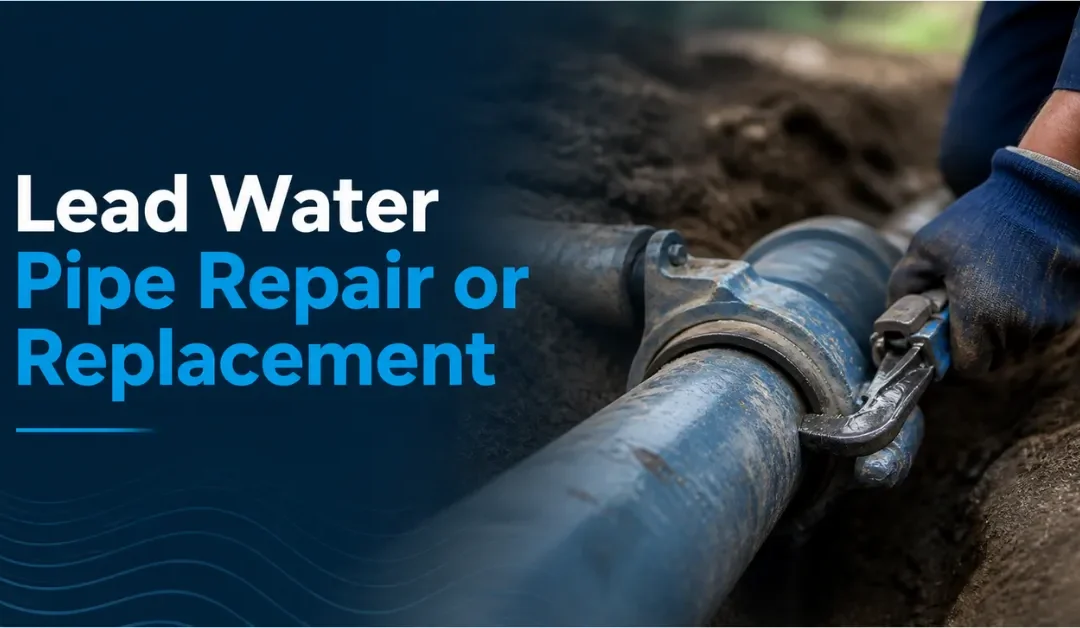
If you have discovered a leak or suspect your property still has older plumbing, you are likely asking one key question.
Should you go for lead water pipe repair, or is it time to replace the pipe completely?
This is not a small decision. It affects your health, your property value, and your long-term costs. Making the wrong choice can mean paying twice or dealing with ongoing issues that could have been avoided.
This guide gives you a clear and practical breakdown so you can decide with confidence.
Do You Actually Have Lead Pipes?
Before anything else, you need to confirm whether lead pipes are present in your property.
Lead pipework was widely used in UK homes built before 1970. Many of these properties still rely on the original supply pipes, especially where no major upgrades have been made.
The quickest way to check is to look at the pipe near your internal stop tap.
Gently scratch the surface with a coin. If it reveals a shiny silver colour underneath, there is a strong chance it is lead.
Here is a simple comparison to help identify pipe materials.
| Pipe Type | Appearance | Key Characteristics |
| Lead | Dull grey, soft | Shiny silver when scratched |
| Copper | Orange-brown | Hard, metallic finish |
| Plastic (MDPE) | Blue or black | Smooth and flexible |
If you are unsure, a plumber can confirm it quickly. You can also request a water test through your supplier.
Why Lead Pipes Should Not Be Ignored
Lead is not just an outdated material. It is a serious health risk.
There is no safe level of lead exposure in drinking water. Even small amounts can build up over time and cause harm.
The risk increases in certain conditions.
Water that sits in pipes overnight can absorb more lead.
Older pipes are more likely to release particles.
Soft water areas can accelerate contamination.
Disturbing old pipework can release built up deposits.
The issue is that you will not see or taste the contamination. It happens silently, which is why it often goes unnoticed for years.
Lead Water Pipe Repair: What It Actually Means
A lead water pipe repair is usually a temporary fix.
It involves sealing a leak or damaged section using specialist clamps or connectors designed for lead pipes. This stops water from escaping and prevents immediate property damage.
However, it does not remove the presence of lead.
The pipe remains in place. The contamination risk remains exactly the same.
Repair is about control, not resolution.
When Repair Makes Sense
There are situations where repair is the right short-term decision.
If there is an active leak causing damage, immediate repair is necessary to stop water loss.
If the property is being sold, a temporary repair may be used while the buyer plans a full upgrade.
Landlords may use repair to stabilise the issue before scheduling proper replacement work.
In all these cases, repair is a temporary step. It should always be followed by replacement.
Cost of Lead Pipe Repair
Repair costs are relatively low compared to full replacement.
| Repair Type | Estimated Cost |
| Minor leak repair | £100 to £200 |
| Moderate repair with access issues | £200 to £300 |
At first glance, this may seem like the cheaper option.
But it is important to remember that the underlying issue is still there.
Lead Pipe Replacement: The Long-Term Solution
Replacing your lead pipe removes the problem completely.
Modern systems use MDPE plastic or copper pipework. Both materials are durable, safe, and designed to last for decades.
Once replaced, you eliminate the contamination risk permanently.
You also improve water quality, reliability, and often water pressure.
Do Lead Water Pipes Need to Be Replaced?
This is one of the most common questions.
The honest answer is yes, if you want a long-term solution.
While not legally required in every situation, replacement is strongly recommended for health, safety, and property value reasons.
It is also becoming a standard expectation during property sales.
Partial Replacement vs Full Replacement
Some homeowners consider replacing only part of the pipe.
This approach often causes more problems than it solves.
Disturbing old lead pipes can release built-up particles into the water. This can temporarily increase contamination levels.
Full replacement from the boundary to your internal stop tap is the correct approach.
Understanding Pipe Responsibility
Most homeowners do not realise that their water supply is split into two sections.
| Pipe Section | Ownership | Responsibility |
| Communication pipe (street to boundary) | Water company | Often replaced free |
| Supply pipe (boundary to property) | Homeowner | Paid by homeowner |
This distinction matters because you may not need to pay for the entire replacement.
If you are unsure, this guide on who is responsible for mains water pipes on my property explains everything clearly.
Lead Pipe Replacement Cost in the UK
Replacement costs vary depending on several factors including pipe length, access, and ground conditions.
| Scenario | Estimated Cost |
| Short internal pipe replacement | £400 to £900 |
| Full replacement with excavation | £1,000 to £3,000 |
| Complex jobs under driveways | £3,000+ |
If you want a more detailed breakdown, you can review the lead pipe replacement cost to understand pricing in more detail.
What Happens During Replacement
The process is more straightforward than most people expect.
First, the existing pipe route is assessed.
Next, the old lead pipe is removed or bypassed.
A new MDPE or copper pipe is installed.
Connections are made at the boundary and inside the property.
The system is tested and flushed.
Most installations are completed within one day.
Modern Installation Methods
Traditional excavation is not always required.
Trenchless methods, such as moling, allow pipes to be installed underground with minimal disruption.
This avoids damage to driveways, gardens, and pathways.
It also reduces labour and reinstatement costs.
Risks of Delaying Replacement
Delaying action can lead to multiple problems.
Ongoing exposure to lead contamination
Potential impact on children and vulnerable individuals
Higher long-term repair costs
Complications during property sales
Unexpected leaks requiring urgent attention
In emergencies, you may end up needing mains water leak repair, which can be far more expensive than planned work.
Repair vs Replacement Comparison
| Factor | Repair | Replacement |
| Stops leak | Yes | Yes |
| Removes lead risk | No | Yes |
| Long-term solution | No | Yes |
| Typical cost | £100 to £300 | £400 to £3,000+ |
| Lifespan | Short term | 50+ years |
This comparison makes the decision clearer in most cases.
How to Decide What Is Right for You
You can simplify the decision by asking yourself four key questions.
Is there an active leak that needs immediate attention
Are there children or vulnerable individuals in the property
Are you planning to sell the property soon
Do you want a permanent solution rather than a temporary fix
If the answer to any of these points is yes, replacement is usually the better choice.
Common Mistakes to Avoid
Many homeowners make avoidable mistakes when dealing with lead pipes.
Treating repair as a permanent solution
Replacing only part of the pipe
Choosing the cheapest quote without checking quality
Ignoring the issue because there is no visible leak
Not checking eligibility for water company contributions
Avoiding these mistakes can save both money and stress.
Impact on Property Value
Lead pipes can affect property value more than most people realise.
Surveyors often flag them during inspections.
Buyers may request price reductions.
Mortgage lenders may raise concerns in some cases.
Replacing the pipe removes this issue completely and makes the property more attractive to buyers.
Long-Term Benefits of Replacement
Replacing lead pipes offers several long-term advantages.
Improved water quality
Better water pressure
Reduced maintenance issues
Increased property value
Peace of mind for decades
It is not just a repair. It is an upgrade to your entire water system.
Final Thoughts
Choosing between lead water pipe repair and replacement comes down to one simple point.
Repair is temporary. Replacement is permanent.
If you are dealing with an emergency, a repair may be necessary in the short term. But it should always lead to a full replacement plan.
Replacing your lead pipe removes health risks, improves your property, and ensures you will not need to revisit the issue.
It is a one-time decision that delivers long-term security.
If you are unsure about your situation, the best next step is a professional assessment. Once you understand your pipe system clearly, the right decision becomes much easier.