
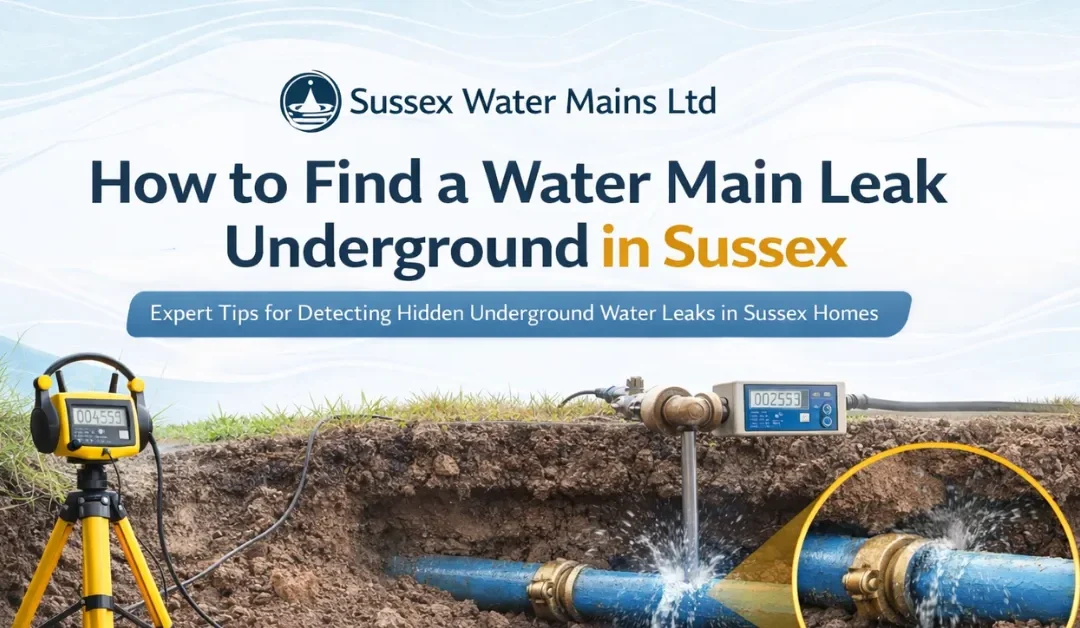
Underground water main leaks are rarely dramatic. There is usually no burst pipe spraying water into the air or a flooded driveway that clearly points to the problem. Instead, these leaks stay hidden beneath the ground, quietly wasting thousands of litres of water and slowly damaging your property before most homeowners even realise there is an issue.
For many homeowners across Sussex, the first warning sign is not visible water at all. It is a sudden increase in the water bill, reduced pressure inside the home, or unexplained damp patches that never seem to dry out. By the time the source becomes obvious, the soil beneath a garden, driveway, or even the foundations may already be compromised.
Knowing how to find a water main leak underground early is not just about saving water. It is about avoiding unnecessary excavation, structural damage, and costly repairs. This guide explains how underground leaks behave, what you can check yourself, and when professional underground water main leak detection becomes essential.
If you suspect a leak, early action can make the difference between a simple repair and a full water main replacement in Sussex.
Understanding Your Underground Water Main
Before you can locate a leak, it helps to understand what you are dealing with.
Your underground water main, often called the supply pipe, runs from the water company’s main in the street to your internal stopcock. Everything from the boundary of your property to your home is typically the homeowner’s responsibility.
In Sussex, pipe condition varies widely depending on property age, soil type, and historical installation methods.
Why Pipe Material Matters
Different pipe materials fail in different ways, which affects how leaks present themselves.
- Older properties (Victorian and Edwardian homes)
Many still have lead supply pipes. These are prone to pinhole leaks and corrosion and are now considered a health risk. In many cases, the best long-term solution is to replace old lead pipes in Sussex using modern techniques such as moling. - Mid-20th-century properties
Galvanised steel pipes were common. These corrode internally over time, weakening the pipe walls until they split under pressure. - Modern properties
MDPE (blue plastic) pipes are more durable but can still fail if damaged by sharp stones, poor bedding, or ground movement.
Understanding what type of pipe you have helps explain why leaks develop and how underground water travels once a pipe is compromised.
How Does Water Travel From an Underground Mains Leak?
One of the most common questions homeowners ask is: how far does water travel from an underground mains leak?
The answer often surprises people.
Water does not usually rise straight up to the surface. Instead, it follows the path of least resistance through the soil. Depending on ground conditions, water may travel several metres away from the actual leak point.
Underground water commonly moves along:
- Old utility trenches where the soil is looser
- Gravel bedding around pipes
- Foundation edges and footings
- Natural soil layers, such as chalk or clay seams
This is why a wet patch in your garden or driveway does not necessarily sit directly above the leak. The leak itself could be under a paved area, lawn, or even beneath the house.
This behaviour makes detecting an underground mains water leak particularly challenging without proper testing.
Common Warning Signs of a Hidden Water Main Leak
Most underground leaks give subtle warnings long before serious damage occurs. Spotting these signs early can save significant time and expense.
1. Continuous Water Meter Movement
If you have a water meter, it is one of the most reliable indicators of a leak.
- Turn off all taps and appliances inside the property
- Check the meter
- If the dial or digital display continues to move, water is escaping somewhere underground
This is often the first sign homeowners notice.
2. Unusually Green or Fast-Growing Vegetation
A patch of grass that stays lush during dry weather or soil that feels permanently soft can indicate constant saturation from below.
3. Sounds of Water When Everything Is Off
At night, when the house is quiet, listen near your internal stopcock. A faint hissing, whooshing, or rushing noise may indicate water escaping from a pressurised pipe.
4. Drop in Water Pressure
If showers weaken, taps fluctuate, or a combi boiler struggles to maintain pressure, water may be leaking before it reaches your home.
In urgent cases where pressure drops suddenly, you may need 24/7 burst pipe repair in Sussex.
5. Cracks in Driveways or Paving
Constant moisture washes soil away, creating voids beneath hard surfaces. Over time, this leads to cracking, sinking, or uneven paving.
6. White Residue on Brickwork
Efflorescence, a white powdery deposit on brickwork near ground level, can indicate prolonged moisture evaporation from saturated soil.
7. Persistent Water in the Gutter or Pavement
On dry days, a constant trickle of water in the road or pavement outside your property may point to a leaking supply pipe running downhill.
DIY Checks to Confirm an Underground Leak
Before calling in specialist equipment, there are a few safe checks you can carry out to confirm whether the leak is underground.
Step 1: Isolate the Internal Supply
- Turn off your internal stopcock
- Check the external water meter
- If the meter continues moving, the leak is in the underground supply pipe
Step 2: Follow the Pipe Route
Most supply pipes run in a relatively straight line from the meter to the point where they enter the house. Walk this route and look for signs of heaving, sinking, or damp ground.
Step 3: Listen for Vibration
Using a long screwdriver placed against the pipe entry point, press your ear to the handle. Water leaks create vibration that can travel along the pipe.
Step 4: Check Soil Saturation
Using a thin metal rod, gently probe the ground along the pipe route. Consistently wet soil in one area often marks the general leak zone.
If these steps suggest a leak but you cannot pinpoint the exact location, professional water leak detection services are the safest next step.
Professional Underground Water Main Leak Detection Methods
Modern detection techniques eliminate the need for guesswork or destructive digging. Specialists use non-invasive tools to locate leaks with high accuracy.
Acoustic Correlation
This method listens for the sound of escaping water.
Sensors are placed at two points on the pipe, often at the meter and internal stopcock. The system measures the time difference in sound travel to calculate the precise leak location.
Tracer Gas Detection
A hydrogen and nitrogen gas mix is introduced into the pipe. The gas escapes through the leak and rises to the surface, where a sensitive mains water underground leak detector identifies its concentration.
This method is especially effective for deep or hard-to-access pipes.
Thermal Imaging
Leaking mains water is usually colder than the surrounding ground. Thermal cameras detect temperature differences beneath driveways, patios, and lawns.
Ground Penetrating Radar
In complex cases, GPR identifies disturbed soil or voids caused by long-term leakage, helping confirm the affected area.
These technologies allow accurate repairs without unnecessary excavation, protecting landscaping and hard surfaces.
Who Is Responsible for an Underground Water Main Leak?
Responsibility is a common concern for homeowners.
Property Boundary Responsibility
In most cases:
- The water company is responsible up to the property boundary
- The homeowner is responsible for the boundary of the house
This includes repairs, detection, and reinstatement.
Insurance Trace and Access Cover
Many UK home insurance policies include trace and access cover, which can pay for:
- Leak detection
- Excavation
- Repairs
- Reinstatement of surfaces
It is always worth checking your policy before proceeding.
Local water authorities such as Southern Water may issue notices requiring prompt repairs if excessive leakage is detected.
Why Blind Digging Is a Costly Mistake
Attempting to locate a leak by randomly digging often leads to higher costs and unnecessary damage.
Blind digging risks:
- Striking gas, electric, or fibre-optic services
- Excavating the wrong area
- Damaging driveways, patios, or foundations
- Increased labour and reinstatement costs
Professional detection is almost always more cost-effective than trial-and-error excavation.
Repair and Long-Term Solutions
Once the leak is located, the repair method depends on pipe condition, location, and future reliability.
Localised Repairs
Small leaks in otherwise sound pipes can often be repaired with minimal excavation.
Pipe Replacement
Older or damaged pipes may require full water main replacement in Sussex, especially if lead or corroded steel is involved.
Moling Technology
Modern moling services in Sussex allow new pipes to be installed underground with minimal disruption, preserving driveways and gardens.
Upgrading for Future Reliability
Many homeowners choose to upgrade water mains pipe systems to improve pressure, reliability, and compliance with modern standards.
Additional services, such as water meter installation, may also improve monitoring and efficiency.
Frequently Asked Questions
How long can an underground water main leak go unnoticed?
Leaks can persist for weeks or months before visible signs appear, especially in free-draining soils.
Can an underground leak damage foundations?
Yes. Prolonged saturation can wash away soil beneath foundations, leading to movement and cracking.
Is leak detection disruptive?
Modern detection methods are non-invasive and rarely require digging.
Should I replace lead pipes even if they are not leaking?
Yes. Lead pipes pose health risks and are more likely to fail over time.
Key Takeaways for Sussex Homeowners
- Water meters are the earliest and most reliable indicator
- Underground water can travel several metres from the leak source
- Professional detection saves time, money, and disruption
- Insurance may cover detection and repair costs
- Acting early prevents structural damage and higher expenses
Dealing With a Suspected Underground Water Leak in Sussex
Underground leaks require a combination of local knowledge, specialist equipment, and practical experience. From chalky Downs soil to heavy Weald clay, conditions across Sussex vary significantly.
If you suspect a leak or need expert advice, working with a trusted water mains company in Sussex ensures the issue is resolved efficiently and correctly.
You can review real experiences from local homeowners in our customer reviews of water mains in Sussex, or contact a water mains company in Sussex directly for professional guidance.For expert detection, repairs, and long-term solutions, contact Sussex Water Mains for reliable, professional support across Sussex.