
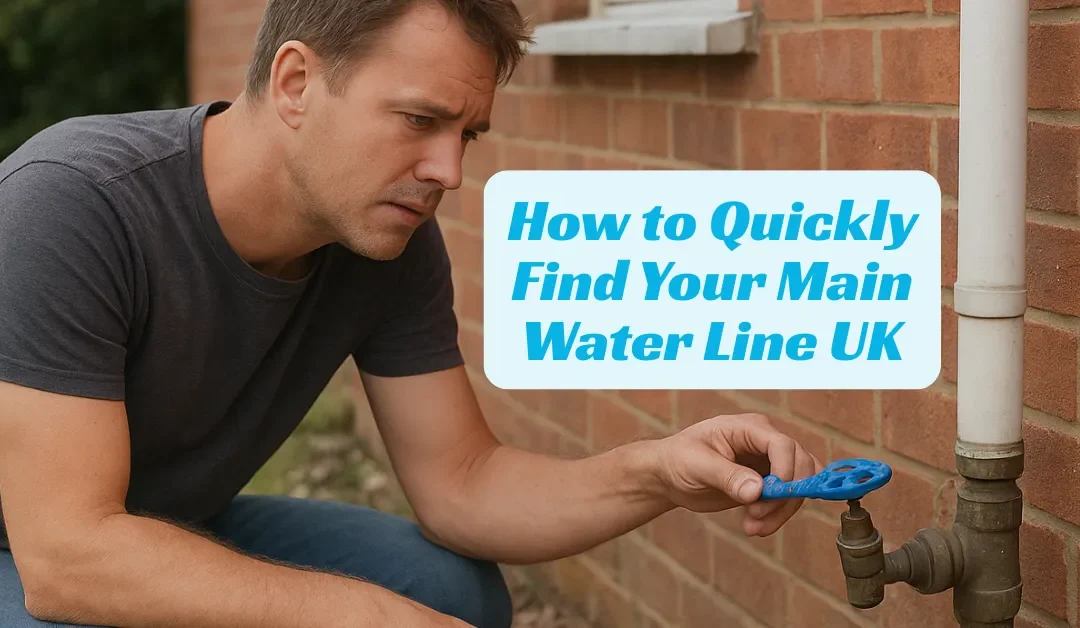
Knowing how to find your main water line in the UK is essential for every homeowner. Whether you’re planning plumbing work, dealing with low water pressure, or facing a sudden leak, locating your main supply line can save time, money, and property damage.
At Sussex Water Mains, we regularly help homeowners identify, repair, and upgrade their main water supply lines across Sussex. Understanding where your main line runs and where your main shut-off valve is located ensures you can act quickly during emergencies and maintain a reliable water supply.
What Is a Main Water Line and Why Does It Matter?
Your main water line is the pipe that connects your home to the public water supply. It’s usually buried underground and enters your property from the street, typically near the boundary or driveway.
This pipe delivers clean, pressurised water to your home’s internal plumbing system. If it becomes damaged or blocked, you might notice:
- Reduced water pressure
- Discoloured or murky water
- Persistent leaks in your garden or driveway
- Sudden increases in water bills
Ignoring these signs can lead to burst pipes or flooding, which is why finding and inspecting your water line early is so important.
How to Find Where the Main Water Line Enters Your House
When searching for how to find where the main water line enters your house, the key is knowing where water typically enters UK homes. In most properties across Sussex, you can follow these steps:
Step 1: Start Outside | Find the Stop Tap
Your external stop tap (also called the external stopcock) is usually located at the edge of your property, either in the pavement or your front garden.
Look for a small metal or plastic cover marked “Water”.
Lift the cover and you’ll often see a small valve that turns clockwise to shut off the main supply. This marks where your home’s main water line connects to the public network.
Step 2: Trace the Line Toward Your Home
Once you’ve found the external stop tap, imagine a straight line from that point toward your house. The supply pipe usually runs in a direct path underground toward your home’s foundation.
If your property has undergone renovations, moling, or pipe upgrades, the route may differ slightly. You can always contact Water leak detection services for help tracing it accurately.
Step 3: Locate the Internal Stop Tap
Inside your home, the internal stop tap (or indoor stopcock) is usually located close to where the water pipe enters the property. Common locations include:
- Under the kitchen sink
- In a utility room or garage
- Near the downstairs toilet
- Beneath the stairs or in a cupboard close to the front door
Turn the tap clockwise to shut off the water and anticlockwise to turn it back on. If it’s stuck or corroded, don’t force it; contact a water mains company in Sussex for safe assistance.
How Do You Find Your Water Main Underground?
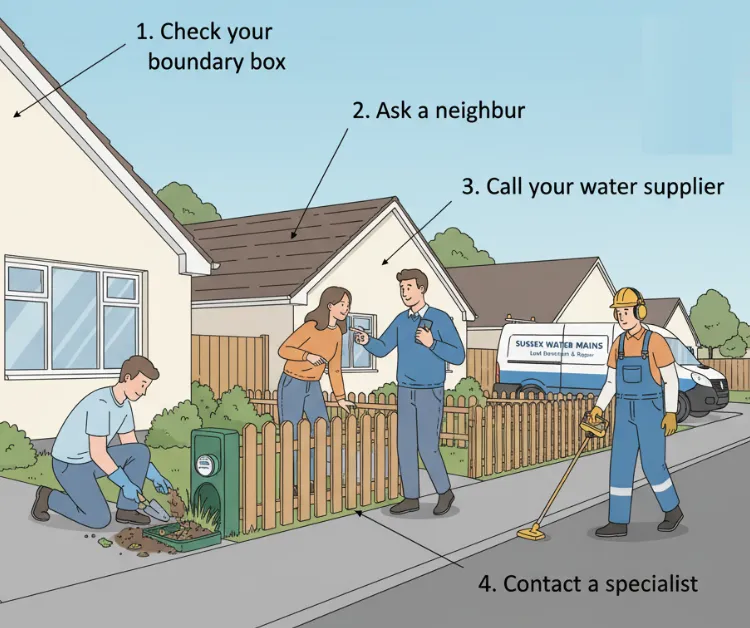
If you can’t locate your line from visual clues, you might need to trace it underground. There are several safe and effective methods to do this:
1. Use a Pipe Detector or Tracing Equipment
Professional plumbers use electronic pipe locators that send a signal through the supply pipe, helping to pinpoint its exact route underground.
This is especially useful for older properties with unclear layouts.
2. Look for Property Plans or Maps
If your home is newer or has had utility work done, the developer or local council may have a plan showing the location of your water main.
In Sussex, you can also request mapping assistance from Southern Water.
3. Hire Professionals
For accurate tracing without unnecessary digging, professional services like Moling services Sussex or Water main replacement Sussex use advanced locating tools to trace and replace pipes safely and efficiently.
What to Do If You Can’t Find Your Water Main
If your property doesn’t have clear access or your stop taps are missing or damaged:
- Check the boundary box at the end of your driveway; sometimes the stopcock is buried under soil or debris.
- Ask neighbours if they’ve located theirs; homes built in the same era often have identical setups.
- Call your water supplier (for Sussex, this is usually Southern Water). They can confirm where your connection lies.
- Contact a specialist like Sussex Water Mains for emergency pipe repairs or tracing services.
When Should You Replace Your Main Water Line?
Finding your main line is one thing, but knowing when to replace it is equally important.
Older homes, especially those built before the 1970s, may still have lead or steel pipes that corrode over time.
You should consider replacement or upgrade if you notice:
- Repeated leaks in the same area
- Low or fluctuating water pressure
- Discoloured or metallic-tasting water
- Lead pipes (which can pose health risks)
Professional services such as replacing old lead pipes in Sussex can modernise your system safely using trenchless techniques like moling.
How Professionals Locate and Upgrade Water Mains
When you call an expert, here’s what typically happens:
1. Site Inspection
A technician inspects your home and property layout to assess the most likely route of the water line and checks access points.
2. Leak Detection & Tracing
Using acoustic listening devices and pressure testing, they detect underground leaks or blockages without excavation.
3. Moling and Installation
Through moling technology, a small pneumatic machine bores tunnels underground, allowing new pipes to be installed with minimal disruption.
This method is fast, eco-friendly, and ideal for upgrading water mains pipes in established gardens or driveways.
4. Testing and Connection
After installation, pressure tests ensure the new line is leak-free and compliant with WaterSafe standards before reconnecting your supply.
DIY vs Professional Help: Which Is Better?
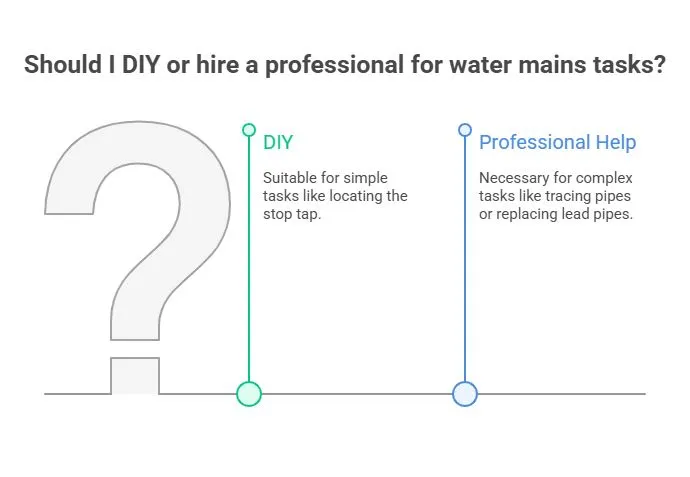
| Task | DIY | Professionl |
| Locating the internal stop tap | ✅ Yes | ✅ Yes |
| Tracing underground pipe | ❌ No | ✅ Yes |
| Repairing leaks | ❌ No | ✅ Yes |
| Replacing lead pipes | ❌ No | ✅ Yes |
| Installing a water meter | ❌ No | ✅ Yes |
While you can identify your stop tap or inspect for visible issues yourself, anything involving underground pipes, excavation, or moling should always be left to qualified professionals like Sussex Water Mains.
Preventative Maintenance Tips
- Check your internal stop tap twice a year to ensure it turns smoothly.
- Insulate exposed external pipes during winter to prevent freezing.
- Keep the access cover to your external stop tap clear of debris.
- If you have old lead pipes, consider water main replacement in Sussex before issues arise.
- Install a water meter to monitor usage and spot leaks early.
Frequently Asked Questions
1. Where is the main water shut-off valve in a UK house?
It’s usually under the kitchen sink, near the front of the property, or in a downstairs cupboard close to where the water pipe enters your home.
2. What if my stop tap won’t turn?
Don’t force it. Contact 24/7 burst pipe repair Sussex or your local plumber. Forcing a seized valve can cause further damage.
3. How deep are the main water pipes buried in the UK?
Most water mains are buried 750-1200mm deep to protect them from frost and damage, but older properties may vary.
4. Can I replace my water main myself?
No. In the UK, water mains work must comply with the Water Regulations and should only be carried out by an approved contractor, such as Sussex Water Mains.
5. Who is responsible for the water main?
You’re responsible for the supply pipe from the boundary of your property to your home. The water company is responsible for the pipes in the road.
Conclusion
Knowing how to find your main water line, which UK homeowners can use for leak prevention and maintenance, is vital for every property owner.
By understanding where your water enters your home and how to shut it off, you can act fast during emergencies and keep your plumbing system running efficiently.
If you suspect a leak, a damaged pipe, or need an upgrade, trust the water mains replacement experts at Sussex Water Mains. We provide safe, efficient, and fully compliant services across Sussex, helping you protect your property and water supply.